General Dentistry
Wisdom Tooth Extraction London | From £250 | South Kensington
Private wisdom tooth extraction in South Kensington, London SW7. Carried out under local anaesthetic by GDC-registered dentists in a CQC-regulated clinic. Transparent fees from £250. Call 020 7183 0755.
If you are considering wisdom tooth extraction in London, understanding the procedure, the likely cost, and what to expect during recovery is an important first step. At Cosmetic Dentistry Clinic in South Kensington, our GDC-registered dentists carry out wisdom tooth removal under local anaesthetic in a private, CQC-regulated setting. Every case begins with a thorough clinical assessment to confirm whether removal is the most appropriate option for you.
Wisdom Tooth Extraction Cost in London
Cost is often one of the first things patients want to understand when considering wisdom tooth removal — and rightly so. Fees vary depending on how the tooth is positioned and how accessible it is. A fully erupted upper wisdom tooth is generally more straightforward, while a tooth that is angled, partially erupted, or covered by bone typically requires a more involved surgical approach.
At our clinic, our extraction fees follow a transparent three-tier structure. Your dentist will explain which tier applies to your case after assessment and any necessary X-rays:
| Extraction Type | Standard Fee | Member Fee (50% Off) |
|---|---|---|
| Simple Extraction Fully erupted, straightforward access | from £250 | from £125 |
| Complicated Extraction Partially erupted, curved roots, or restricted access | from £450 | from £225 |
| Surgical Extraction Bony impaction or tooth sectioning required | from £650 | from £325 |
| Consultation & Clinical Assessment | £95 | £47.50 |
| Periapical X-ray (if required) | £20 | £10 |
| Panoramic X-ray / OPG Referred to Dental Imaging Centre · charged separately | £60 | £60 |
About imaging: Many wisdom tooth cases — particularly lower wisdom teeth — require a panoramic (OPG) X-ray to assess root anatomy and proximity to nearby structures. Where this is needed, we refer to a trusted local imaging centre. The £60 fee is paid directly to the imaging provider.
For a more detailed breakdown of what is included in each fee, NHS vs private comparison, and finance options, see our dedicated wisdom tooth extraction cost page. Our full treatment fee schedule is also available, and finance options are explained on our finance information page.
When Wisdom Teeth May Need to Be Removed
Not every wisdom tooth needs removing. Many patients keep theirs for life without difficulty. National guidance — including from the National Institute for Health and Care Excellence (NICE) — recommends that wisdom teeth should only be removed where there is a clear clinical reason to do so. Your dentist will discuss the findings of your assessment honestly and only recommend removal where it is in your interest.
Common situations where wisdom tooth removal may be considered include:
Recurrent Pericoronitis
When a partially erupted wisdom tooth causes repeated infection and inflammation of the gum flap that covers it. You can read more about this on our wisdom tooth pain information page.
Decay That Cannot Be Restored
A wisdom tooth that has developed extensive decay, or that has caused decay in the neighbouring tooth, may not be practical to restore due to its position at the back of the mouth.
Damage to the Adjacent Tooth
An impacted wisdom tooth angled against the tooth in front may cause resorption of the root, decay along the contact point, or persistent food trapping.
Associated Cyst or Pathology
Where X-rays show a cyst or other pathological change around the wisdom tooth, removal is generally advisable to address the underlying condition.
Persistent Difficulty Cleaning
When a wisdom tooth's position makes it impossible to keep clean despite good oral hygiene, the risk of ongoing gum disease and decay around it increases.
Symptom-Free Wisdom Teeth
If a wisdom tooth is healthy, in a good position, and causing no problems, current UK guidance is to monitor it rather than remove it. Routine "preventive" removal is not recommended.
Note: The presence of one or more of these features does not automatically mean removal is needed. Each case is considered individually, with imaging and clinical findings reviewed before a recommendation is made.
The Wisdom Tooth Extraction Procedure
Understanding what happens during a wisdom tooth extraction can help reduce uncertainty before your appointment. Our approach is calm, methodical, and paced to your comfort:
Clinical Assessment and Diagnosis
Your dentist will examine the tooth, review your medical history, and take any X-rays needed to understand the position of the roots and surrounding structures. For most lower wisdom teeth, a panoramic X-ray is recommended.
Discussion, Consent and Planning
We explain the findings in plain language, discuss your options (including monitoring where appropriate), and talk through the benefits, risks, and alternatives so you can give fully informed consent. You will always have time to ask questions before deciding.
Local Anaesthetic for Comfort
A topical numbing gel is applied before the local anaesthetic is administered. We wait until the area is fully numb before any procedure begins. You will be awake throughout, but should not feel pain — only mild pressure or movement.
Removal of the Tooth
For a straightforward case, the tooth is gently eased out using specialised instruments. For more involved cases, a small gum flap may be lifted, a little bone removed, or the tooth divided into sections so that each piece can be removed through a smaller opening. Each step is paced to your comfort.
Cleaning the Site and Suturing
The socket is irrigated and inspected. Where a gum flap has been raised, dissolvable stitches are usually placed to support healing. A gauze pack is applied to help a stable clot form before you leave.
Post-Operative Instructions
Written and verbal aftercare advice is provided, along with a direct contact number for any concerns. We will also let you know when to expect any review appointment or stitch check.
Anaesthesia and Sedation Policy
All wisdom tooth extractions at our clinic are carried out under local anaesthetic only. We do not offer intravenous (IV) sedation, conscious sedation, or general anaesthetic in-house. This is an active clinical choice — local anaesthetic, when delivered carefully, is safe, well tolerated, and means there is no need for fasting, recovery time, or an escort home in most cases.
If you have a significant dental phobia, complex medical history, or a wisdom tooth case that we feel would be better managed with sedation or general anaesthetic, we will be open and honest with you. In those situations we will discuss referral to a specialist oral surgery service that provides sedation or hospital-based care. Acting within our area of competence is part of our commitment to safe, GDC-compliant practice.
Recovery and Aftercare
Recovery from wisdom tooth extraction varies between individuals and depends on how involved the procedure was. The timeline below is a general guide — your dentist will provide specific advice based on your case.
First 24 Hours
- • Bite gently on gauze for around 30 minutes to help a stable clot form
- • Avoid rinsing, spitting forcefully, or using a straw
- • Avoid hot drinks, alcohol, and smoking
- • Rest and keep your head slightly elevated
- • Take prescribed or recommended pain relief as directed
Days 2–3
- • Begin gentle warm salt-water rinses after meals
- • Eat soft foods at a comfortable temperature
- • Continue to brush the rest of your teeth carefully
- • Some swelling and jaw stiffness is normal at this stage
- • Avoid strenuous exercise
Days 4–7
- • Swelling and discomfort typically begin to subside
- • Gradually reintroduce a wider range of foods as comfort allows
- • Continue salt-water rinses after meals
- • Dissolvable stitches typically begin to break down during this period
Week 2 Onwards
- • Most patients feel largely back to normal
- • The socket continues to heal over the following weeks
- • Routine oral hygiene can usually be resumed fully
- • Any review appointment is typically completed by this stage
Risks We Discuss During Consent
Wisdom tooth extraction is a routine procedure, and most patients recover without difficulty. However, as with any surgical procedure, there are recognised risks that we will explain to you fully before you decide to proceed. Honest discussion of these risks is part of valid consent and reflects guidance from the General Dental Council.
- Pain and swelling: Some discomfort and swelling are expected in the days following extraction. These usually improve steadily with simple pain relief and aftercare.
- Bruising: Bruising of the cheek or jaw may occasionally appear and typically resolves within one to two weeks.
- Dry socket (alveolar osteitis): A delayed-healing condition that may occur if the blood clot is lost early. Risk factors include smoking, vigorous rinsing, and certain medications. It usually responds well to a simple in-clinic dressing.
- Bleeding: Minor oozing for the first day is normal. Persistent or significant bleeding is uncommon and should be reported promptly.
- Infection: A small risk of post-operative infection exists and may require antibiotics if it occurs.
- Limited mouth opening (trismus): Temporary jaw stiffness is common following lower wisdom tooth removal and usually resolves within one to two weeks.
- Nerve disturbance (lower wisdom teeth): The roots of lower wisdom teeth can lie close to nerves supplying the lip, chin, and tongue. In a small percentage of cases, these nerves can be bruised during extraction, causing temporary tingling or numbness. Permanent altered sensation is rare and your X-rays are reviewed carefully to assess this risk before proceeding.
- Sinus communication (upper wisdom teeth): The roots of upper wisdom teeth lie close to the maxillary sinus. In rare cases a small communication can occur between the socket and the sinus, which is managed at the time and usually heals uneventfully.
- Damage to neighbouring teeth or fillings: Uncommon, but mentioned as part of full disclosure.
Your dentist will explain how these risks apply to your individual case, based on your X-rays and clinical findings, before any procedure is booked. You are encouraged to ask questions and take time to consider your options.
When We Refer to a Specialist
Most wisdom tooth removals can be carried out safely in our clinic under local anaesthetic. There are, however, certain situations where we believe specialist oral surgery care is in your best interests. These include:
- Fully bony-impacted lower wisdom teeth with high proximity to the inferior alveolar nerve
- Cases where sedation or general anaesthetic is considered necessary for your comfort or safety
- Complex medical histories that warrant a hospital setting
- The presence of a cyst or other pathology requiring specialist management
When referral is appropriate, we will discuss this openly and direct you to a qualified specialist oral surgery service. Operating within our area of competence is part of how we maintain safe, transparent care in line with GDC standards.
Why Patients Choose Cosmetic Dentistry Clinic
GDC-Registered, CQC-Regulated
Our clinicians are individually registered with the General Dental Council and our clinic is regulated by the Care Quality Commission. Sterilisation, consent, and clinical governance follow current UK standards.
Conservative Clinical Approach
We only recommend removal where there is a clear clinical reason, in line with national guidance. Where monitoring is the better option, we will say so.
Transparent Pricing
Our three-tier fee structure is shared up front, with no hidden costs. Members benefit from a 50% reduction on all extraction fees.
South Kensington Location
A short walk from South Kensington tube station, our private clinic offers a calm setting with appointments allocated sufficient time so that procedures are never rushed.
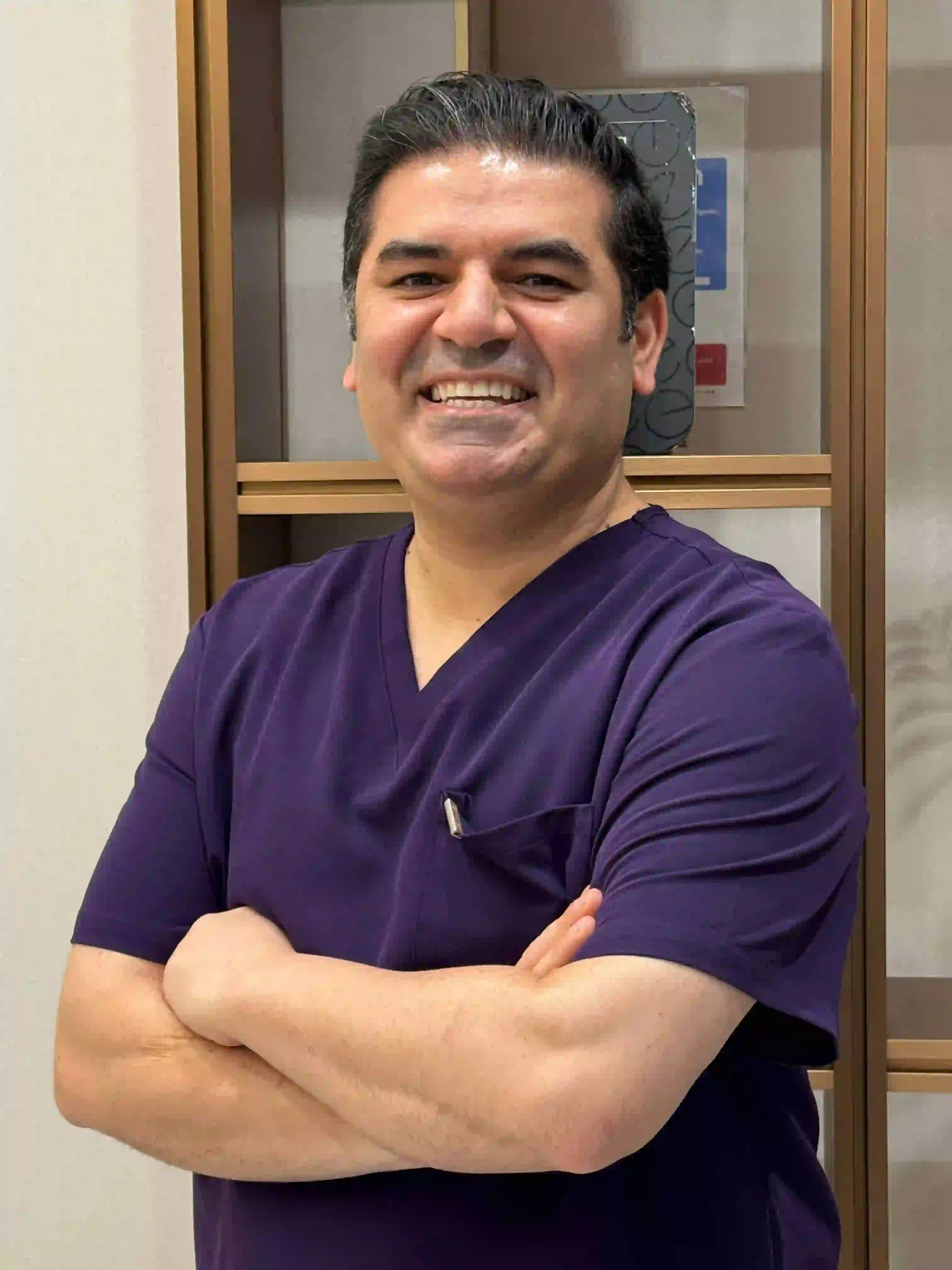
Clinical Lead for Surgical Extractions
Dr Yasha Shirazi (GDC No. 195843), Principal Dentist, leads surgical extractions at our clinic. His clinical interests include oral microsurgery and complex implantology, and he carries out wisdom tooth removals in a private setting under local anaesthetic.
Meet our clinical teamFrequently Asked Questions
Is wisdom tooth extraction painful?
The procedure itself is carried out under local anaesthetic, so the area is fully numb and you should not feel pain — only mild pressure or movement. Some discomfort during recovery is normal and usually manageable with simple pain relief such as ibuprofen or paracetamol, taken as directed.
How long does the procedure take?
A simple extraction may take around 15–20 minutes from start to finish. A more involved surgical case may take 45 minutes to an hour. Appointments are scheduled with enough time so that the procedure is never rushed, and you are not left feeling under pressure.
Do I need to take time off work?
Many patients are able to return to non-physical work the following day, particularly after a straightforward extraction. After a more involved surgical case, 1–2 days of rest is often advisable. Your dentist will give individual guidance based on the work you do and the case carried out.
Can I drive home after the procedure?
Yes — because we only use local anaesthetic and do not provide sedation, most patients are able to drive home afterwards. However, if you feel light-headed or have had a particularly involved procedure, you may prefer to arrange transport.
What should I eat after a wisdom tooth extraction?
For the first 24 hours, soft foods at a comfortable temperature are recommended — for example yogurt, mashed potato, scrambled egg, or smooth soup. Avoid hot drinks, alcohol, and using a straw, as these can disturb the healing clot. Solid foods can be gradually reintroduced as comfort allows.
Do all wisdom teeth need to be removed?
No. Current UK guidance, including from the National Institute for Health and Care Excellence (NICE), is that wisdom teeth should only be removed where there is a clear clinical reason — for example, recurrent infection, decay that cannot be restored, or damage to the adjacent tooth. Symptom-free wisdom teeth in a good position are generally monitored rather than removed.
Do you offer sedation for wisdom tooth removal?
No. All wisdom tooth extractions at our clinic are carried out under local anaesthetic only. If you would prefer sedation or your case is best managed with hospital-based care, we will discuss referral to a specialist oral surgery service.
Will I need a panoramic X-ray (OPG)?
For most lower wisdom teeth, yes — a panoramic X-ray helps us assess root anatomy and the proximity of nearby nerves. We refer to a trusted local dental imaging centre for this. The fee is £60, paid directly to the imaging provider.
What are the signs of dry socket?
Dry socket typically causes an increase in pain 2–4 days after extraction, often with a dull ache that radiates toward the ear and an unpleasant taste. If you suspect dry socket, please contact us — a simple in-clinic dressing usually settles symptoms quickly.
When should I seek urgent help after the procedure?
Please contact us — or in an out-of-hours emergency, call NHS 111 — if you experience heavy bleeding that does not settle with pressure, increasing facial swelling, a high temperature, or difficulty breathing or swallowing. For severe airway or breathing concerns, please attend your nearest A&E or call 999 immediately.
Important: If you develop significant facial swelling that is affecting your breathing or swallowing, or a high fever with spreading swelling, please attend your nearest Accident & Emergency department or call 999 immediately. These may indicate a serious infection requiring hospital-level care.
Related Information
Extraction Cost
Detailed pricing breakdown, what's included, finance options, and NHS vs private comparison.
Wisdom Tooth Pain
Understand pericoronitis, common causes of wisdom tooth pain, and when to seek a professional assessment.
Emergency Dental Care
Same-day appointments for acute pain, infection, and post-extraction concerns.
Impacted Wisdom Teeth
Seven risks of delaying removal of impacted wisdom teeth, and when it may be worth discussing your options.
Discuss Your Wisdom Tooth Concern
Book a consultation with our GDC-registered dentists in South Kensington for a clear, honest assessment of your wisdom tooth and the most appropriate next step.
Cosmetic Dentistry Clinic · 20 Old Brompton Road · South Kensington · London SW7 3DL
Phone: 020 7183 0755 · Email: info@cosmeticdentistryclinic.co.uk
This page is provided for general information only and does not replace individual clinical advice. Suitability for any procedure depends on a clinical examination by a GDC-registered dentist. Our clinic is regulated by the Care Quality Commission (CQC). Fees shown are starting prices and subject to individual clinical assessment.
Expert Insight
"We approach wisdom tooth extraction not just as a procedure, but as a pivotal restoration of self. Precision is our baseline; artistry is our signature."
— Dr. Yasha Y Shirazi
GDC: 195843
The Process
- 01.
Comprehensive Diagnostics & 3D Imaging.
- 02.
Bespoke Treatment Planning & Aesthetic Calibration.
- 03.
Precision Execution & Final Artistry.
Benefits
- Improved Facial Harmony
- Restored Function & Longevity
- Seamless, Natural Aesthetics
Our Clinic Locations
South Kensington Clinic
20 Old Brompton RoadLondon SW7 3DL1 min walk from South Kensington station
Cosmetic Dentist in South Kensington →City of London Clinic
5 Ave Maria LaneLondon EC4M 7AQ3 min walk from St Paul’s station
Cosmetic Dentist in the City of London →Location
Cosmetic Dentistry Clinic20 Old Brompton Road
South Kensington
London, SW7 3DL
Located 2 minutes walk from South Kensington Station.
Opening Hours
- Mon - Wed09:00 - 18:00
- Thu09:00 - 20:00
- Fri09:00 - 17:00
- Sat10:00 - 16:00
- Sun10:00 - 16:00
Uncompromising Standards
True artistry requires a foundation of absolute safety. Our practice operates under the strictest clinical governance, ensuring that your journey is as safe as it is transformative. We are fully regulated, transparent, and dedicated to the highest tenets of medical ethics.

Begin Your Journey
Private consultations available in South Kensington and the City of London. Join our membership for exclusive courtesies.